


Page 32 - 澎湖海洋地質公園-文化與旅遊篇
P. 32
澎湖海洋地質公園 PENGHU MARINE GEOPARK                               文化與旅遊篇         Culture & Travel Volume


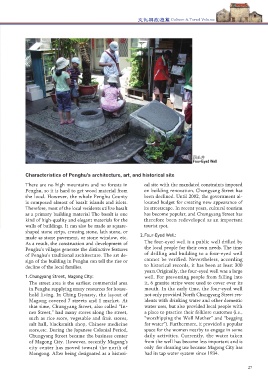
                                                                                       四孔井
                                                                                       Four-Eyed Well


            Characteristics of Penghu's architecture, art, and historical site
            There are no high mountains and no forests in        cal site with the mandated constraints imposed
            Penghu, so it is hard to get wood material from      on building renovation, Chungyang Street has
            the local. However, the whole Penghu County          been declined. Until 2002, the government al-
            is composed almost of basalt islands and islets.     located budget for creating new appearance of
            Therefore, most of the local residents utilize basalt   its streetscape. In recent years, cultural tourism
            as a primary building material The basalt is one     has become popular, and Chungyang Street has
            kind of high-quality and elegant materials for the   therefore been redeveloped as an important
            walls of buildings. It can also be made as square-   tourist spot.
 馬公市中央街 Chungyang Street, Magong City  shaped stone strips, crossing stone, lath stone, or   2.Four-Eyed Well:
            made as stone pavement, or stone window, etc.
 建築、藝術與古蹟特色  As a result, the construction and development of    The four-eyed well is a public well drilled by
            Penghu’s villages generate the distinctive features   the local people for their own needs. The time
 澎湖無高山及森林,木建材取得不易,但全縣幾乎  於是日漸沒落,直到2002年政府編列預算打造新  of Penghu’s traditional architecture. The art de-  of drilling and building to a four-eyed well
 都是玄武岩島嶼所組成的,因此居民大多就近取  的街屋風貌,原有的街屋走入歷史,留下的是往  sign of the building in Penghu can tell the rise or   cannot be verified. Nevertheless, according
 材,以玄武岩為主要建材。玄武岩無論是做建物壁  年車水馬龍的記憶。近年來又興起循古探究的文  decline of the local families.  to historical records, it has been at least 300
 體,或是打造為各部位方正的石條、過路、條石  化旅遊,因此又發展為重要的旅遊據點。                       years.Originally, the four-eyed well was a large
 等,或做為鋪面、石窗等,皆是高級而貴重的材  1.Chungyang Street, Magong City:         well. For preventing people from falling into
 料,聚落的建設發展也因此具有澎湖傳統的建築特  2.四孔井:  The street area is the earliest commercial area   it, 6 granite strips were used to cover over its
 色,建物的妝點藝術也因居民的家業興衰有明顯差  四孔井是民間私自所開鑿公用井,開鑿年代及砌成  in Penghu supplying many resources for house-  mouth. In the early time, the four-eyed well
 異。  四孔的年代已難以查考,但依史書記載距今至少也  hold living. In Ching Dynasty, the layout of   not only provided North Chungyang Street res-
 約有300年歷史。四孔井原是一口大井,因怕危險  Magong covered 7 streets and 1 market. At   idents with drinking water and other domestic
 1.馬公市中央街:    that time, Chungyang Street, also called “In-      water uses, but also provided local people with
 居民不慎跌落入井中,因此在井口上用六塊花崗石  ner Street,” had many stores along the street,   a place to practice their folklore customes (i.e.,
 是澎湖最早形成的商家聚集地,供應許多生活物  條覆蓋。四孔井早期不僅供應中央街北端居民的飲  such as rice store, vegetable and fruit stores,   “worshipping the Well Mother” and “begging
 品來源的主要市區。在清朝有所謂的七街一市的  用水及其他民生用水,也具有供居民「拜井母」及  salt hall, blacksmith shop, Chinese medicine   for water”). Furthermore, it provided a popular
 配置,而俗稱街內的中央街當時店舖林立,米  「乞水」的民俗功能,更是附近婦女日常生活的活  store,etc. During the Japanese Colonial Period,   space for the women nearby to engage in some
 舖、蔬果舖、鹽館、打鐵舖、藥材舖等提供生活  動空間。隨著時代的變遷,尤其1934年馬公市全天  Chungyang Street became the business center   daily activities. Currently, the water taken
 必需物販賣。日據時代成為馬公的商業中心,但  候有了自來水之供應後,四孔井水用途才成為次要  of Magong City. However, recently Magong’s   from the well has become less important and is
 現今市場的重心往北遷移。1984年指定為中央街  角色,僅提供居民的日常用水。  city center has moved toward the north of   only  for cleaning use because Magong City has
 古蹟保存區後,建物受法令限制無法任意變動,  Mongong. After being designated as a histori-  had its tap water syatem since 1934.


 26                                                                                                            27

